


Dundrum Civil BESS facility, Wooreen, Victoria, Australia
Case Study | BESS Facility | Melbourne, Victoria, Australia
Case Study | BESS Facility | Melbourne, Victoria, Australia
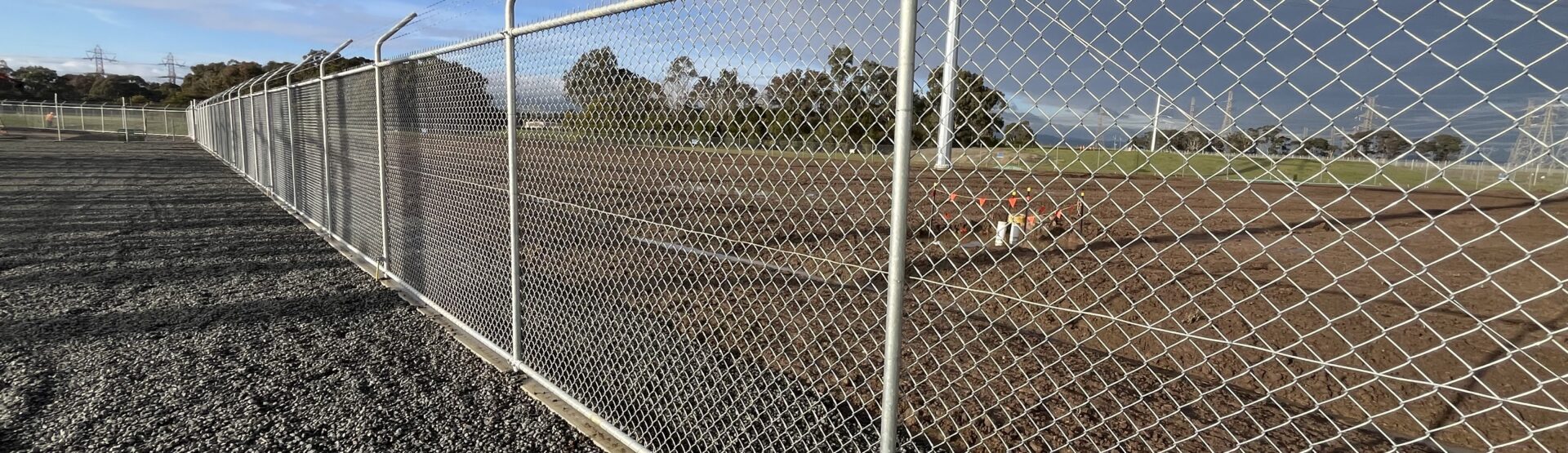
Lee Group delivered a large-scale chainmesh security fencing package for the Dundrum Civil BESS (Battery Energy Storage System) facility in Wooreen, Victoria. BESS sites store and manage significant electrical infrastructure, so the fencing scope had to meet a high security standard while working around cabling that was already in place across the site. The project brought together perimeter fencing, concrete plinth works, and multiple gate installations, delivered over four site visits as our team adapted to the conditions on the ground.
Our team supplied and installed approximately 1,500m of 2.1m high galvanised chainmesh fencing, fitted with top and bottom rails, crank posts, and four runs of barbed wire for added perimeter security. Galvanised chainmesh was specified for its durability in an outdoor, semi-rural setting, where the fencing needed to withstand exposure to the elements over the long term without compromising on security.
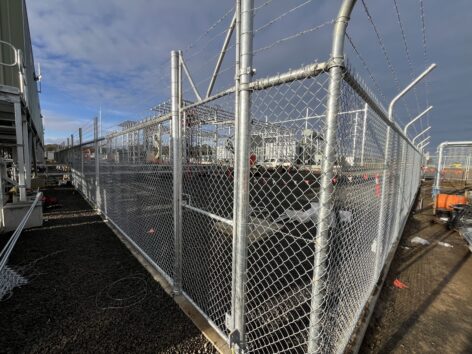
This was paired with 250m of 150 x 150mm concrete hob, forming a solid plinth along key sections of the fence line. The plinth gives the fence a stable, level base across sections of the site where ground conditions varied, and adds a further layer of security at ground level along the perimeter.
Access through the perimeter was handled with five 6m LV double swinging gates for vehicles and light plant, alongside five pedestrian gates positioned at personnel access points. Together, these elements formed a complete, high-security perimeter suited to a battery energy storage facility, balancing controlled access with the practical movement of plant, equipment, and personnel required for a site of this kind.
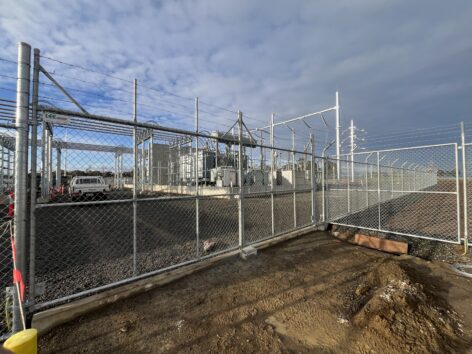 Sections of the fence line ran directly through the site’s existing cable tray infrastructure, which meant our crews couldn’t follow a standard, straight fence run. We adjusted post and rail positions to suit the exact location of the cable trays, keeping the fence line secure while leaving the infrastructure fully accessible for maintenance. Each cable tray crossing was treated as its own setout task, rather than fitted into a uniform fence line, which meant closer coordination between our crews and the site team at every stage.
Site conditions added to the challenge. Wooreen sits around 170km from metropolitan Melbourne, and persistent rain across the build meant our team regularly worked in wet conditions to protect the programme, with a minimum of two rained-off days most working weeks. What was originally scoped as a two-visit job grew to four, giving our crews the time needed to get the cable tray sections right rather than rushing a fix.
BESS and utility sites call for a fencing partner that can adapt on the ground, not just install to a fixed plan. Our work for Dundrum Civil at Wooreen reflects the kind of problem-solving Lee Group brings to complex public infrastructure projects, where the fence line has to coexist with live services rather than run around them.
From chainmesh perimeter fencing to gate installation, our approach is backed by independently certified quality, environmental, and safety standards, and every crew works to the highest safety standards on site, regardless of how demanding the conditions are. As battery energy storage projects continue to expand across regional Victoria, this project reflects the kind of site-specific, infrastructure-aware fencing work Lee Group is set up to deliver.
What is BESS facility fencing, and why does it need to be high security? BESS (Battery Energy Storage System) facilities store significant amounts of electrical energy on site, which means perimeter security is treated with the same priority as other critical electrical infrastructure. Fencing typically includes features such as galvanised chainmesh, crank posts, and barbed wire runs to restrict unauthorised access.
Can fencing be installed around existing cable trays without disrupting them? Yes. Where cable trays or other services already run through a proposed fence line, posts and rails can be positioned to suit the exact layout of the existing infrastructure, keeping the fence secure while leaving cabling fully accessible for future maintenance.
How long does it take to fence a BESS or substation-style site? Timelines depend on the size of the perimeter, ground conditions, weather, and how much of the site involves working around existing infrastructure. On this project, four site visits were required to complete around 1,500m of fencing, concrete plinth, and ten gates, largely due to weather delays and the additional coordination needed around cable trays.
What type of fencing is typically used for battery energy storage and substation sites? Galvanised chainmesh fencing with top and bottom rails, crank posts, and barbed wire is a common specification for BESS and substation perimeters, offering a durable, high-security barrier suited to critical infrastructure sites.