


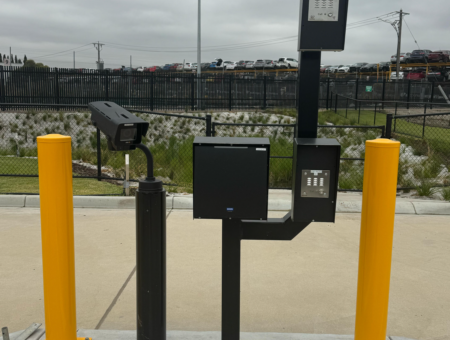
Bollards, Guard Rails & Speed Humps
Car parks are some of the highest-risk, highest-traffic areas on any commercial or industrial site. Pedestrians, forklifts, delivery trucks and everyday vehicles are all moving through the same tight footprint — often at the same time. A well-designed car park safety system isn’t one product, it’s three working together: bollards to protect assets and people, guard rails to control vehicle movement, and speed humps to manage how fast that movement happens.
At Lee Bros Fencing, we design and install car park accessories for builders, facility managers and councils across Melbourne and Victoria, from single-level retail car parks to multi-storey commercial builds. This guide breaks down exactly what each safety product does, when you need it, and how to think about designing a car park that protects people, vehicles and infrastructure.
Why Car Park Safety Design Matters
Car parks sit at the intersection of pedestrian and vehicle traffic, which is exactly why they account for a disproportionate share of workplace and public liability incidents on commercial sites. Poorly protected structural columns, unmarked pedestrian paths, and uncontrolled vehicle speed are the three most common causes of car park incidents, and all three are solved with the right combination of physical safety infrastructure.
Getting the design right isn’t just about compliance; it protects your building structure, your tenants’ vehicles, and your business from costly liability claims. It’s also usually far cheaper to install the right car park barriers upfront than to repair structural damage or defend an incident claim later.
Bollards: Protecting Structure, Assets and People
Bollards are short, sturdy posts installed to stop vehicles from entering an area or making contact with something they shouldn’t- a structural column, a fire hydrant, a pedestrian walkway, a building entrance, or plant and equipment.
Where bollards are typically used:
- Protecting structural columns and load-bearing walls in multi-storey car parks
- Guarding pedestrian entry points and walkways
- Shielding electrical infrastructure, gas meters and fire services
- Marking the edge of ramps, ends of parking bays and ITS/lift lobbies
- Controlling vehicle access at gates and driveways
Types of bollards:
- Fixed steel bollards — permanent, high-strength protection for structural elements
- Removable bollards — allow controlled vehicle access when needed (loading zones, service access)
- Flexible/spring-back bollards — absorb low-speed impacts without damage, ideal for tight car park bays
- Illuminated or reflective bollards — improve visibility in low-light basement or undercover car parks
The right bollard spec comes down to impact rating, location and how much vehicle traffic the area sees — a bollard protecting a fire panel needs a very different rating to one simply delineating a walkway.
Guard Rails: Controlling Vehicle Movement
Where bollards protect a fixed point, guard rails protect a line, they’re used to define vehicle paths, prevent vehicles leaving a ramp or level edge, and separate pedestrian zones from active traffic lanes.
Where guard rails are typically used:
- Along the open edges of elevated car park decks and ramps
- Separating pedestrian walkways from vehicle lanes
- Protecting perimeter walls and glazing from vehicle contact
- Channelling traffic flow through car park entries and exits
- Around loading docks and delivery bays
Guard rails are especially critical in multi-storey and rooftop car parks, where an unprotected edge isn’t just a property risk — it’s a fall risk. Australian Standards set out minimum barrier heights and load ratings for vehicle barriers at height, which makes getting the guard rail spec right a compliance issue as much as a safety one.
Speed Humps: Managing Vehicle Speed
Bollards and guard rails manage where vehicles go, speed humps manage how fast they get there. Even a well-laid-out car park with excellent barrier protection still needs vehicle speed under control, particularly around pedestrian crossings, tight corners and shared zones.
Where speed humps are typically used:
- Entry and exit points where vehicles transition from open road to car park
- Near pedestrian crossings within a car park
- Shared zones where forklifts, delivery vehicles and cars all operate
- Long, straight aisles where vehicles tend to pick up speed
Speed humps come in a range of profiles and materials — from low-rise asphalt humps to modular rubber units that can be relocated as a site’s traffic flow changes. The right choice depends on vehicle type, expected speed reduction, and whether the hump needs to be permanent or adjustable.
How the Three Work Together
None of these three systems is a substitute for the others — they solve different problems:
| System | Protects Against | Best Used For |
| Bollards | Direct vehicle impact on a fixed point | Structural columns, entrances, services, pedestrian zones |
| Guard rails | Vehicles leaving a defined path or edge | Ramps, elevated decks, perimeter lines, traffic channeling |
| Speed humps | Excess vehicle speed | Entry/exit points, pedestrian crossings, shared zones |
A well-designed car park usually layers all three: guard rails define the vehicle path, speed humps control how fast vehicles move along it, and bollards protect the specific points — columns, doorways, services — that can’t afford to be hit.
Designing for Compliance
Car park safety infrastructure in Victoria needs to account for relevant Australian Standards covering vehicle barriers, load ratings and pedestrian safety, as well as any specific requirements set by your building certifier or local council for the site’s use class. Getting the design reviewed against these requirements before installation — not after — is the difference between a smooth sign-off and a costly rework.
If you’re planning a new car park or retrofitting safety infrastructure into an existing one, it’s worth reviewing your full site layout alongside our broader range of commercial and industrial fencing products, particularly if the car park sits alongside gates or perimeter security fencing that need to work as one integrated access and safety system.
Frequently Asked Questions
What’s the difference between a bollard and a guard rail?
A bollard is a fixed point protecting a specific object or area — a column, entrance or piece of equipment. A guard rail runs along a line, protecting an edge or channeling vehicle movement along a defined path. Most car parks need both.
Do I need speed humps if I already have guard rails and bollards?
Yes, in most cases. Guard rails and bollards control where a vehicle can go, but they don’t control speed. Speed humps are the main tool for reducing vehicle speed in pedestrian-heavy or high-traffic zones.
Are removable bollards a good option for car parks?
Removable bollards are a strong choice where you need occasional vehicle access to an otherwise protected area, loading zones, service bays or emergency access points — without compromising day-to-day protection.
What car park areas are most commonly missed in safety design?
The most commonly overlooked areas are ramp edges without adequate guard rail height, structural columns near tight turning bays, and pedestrian paths that cross vehicle lanes without a speed-reduction measure nearby.
Get Your Car Park Safety Assessed
Every car park has a different traffic flow, structural layout and risk profile, which means there’s no one-size-fits-all specification for bollards, guard rails and speed humps. Our team works with builders, facility managers and councils across Melbourne to design and install car park safety systems that meet Australian Standards and hold up to real-world use.
Get in touch with Lee Group to discuss your car park’s safety requirements.