
Fencing Defcon Security Fences.

Lee GroupProductsDEFCON Security Fences
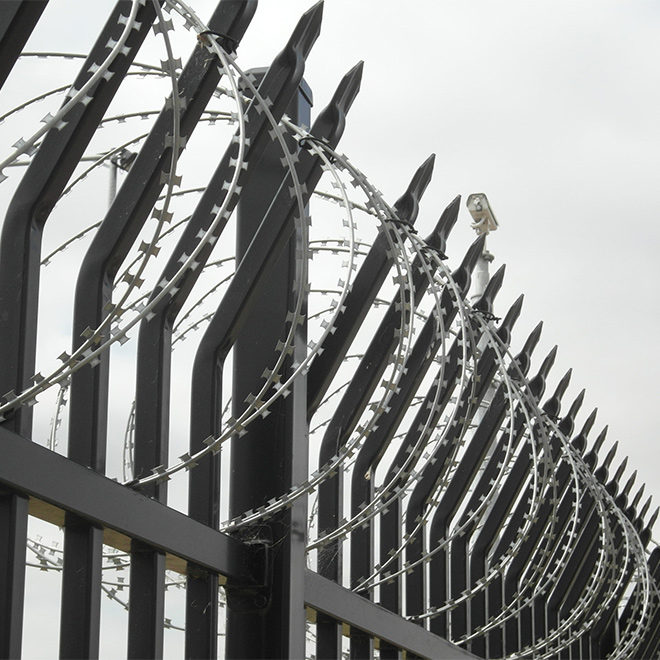
For high security purposes we recommend the use of our prison grade DEFCON range. 

Defcon describes the “Defence Readiness Condition” and is a measure of the importance of the client’s expectation of a product that offers maximum protection without compromise.

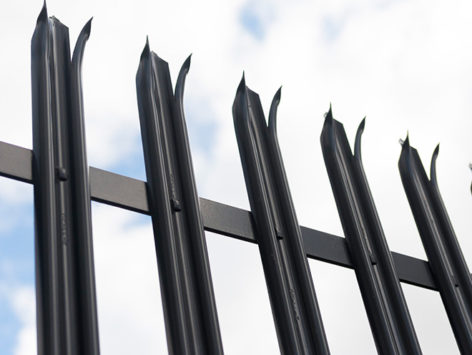
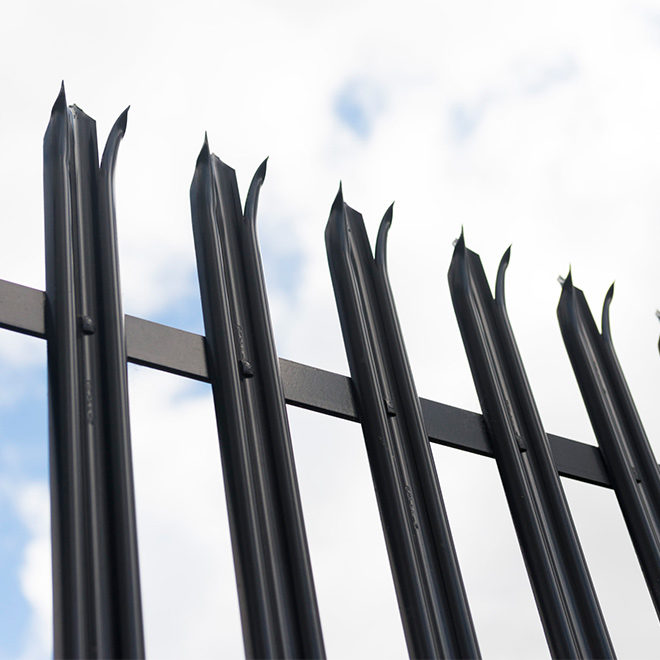
DEFCON PALISADE Security Fence

Our Premium Deterrent Fence

These Pales are rolled from 70x3mm high strength steel to create a W profile to further increase the pale strength.

Secured to 50x50x5 angle rail and you have a mighty “TOUGH” fence!

If you have any reservation as to the strength, let us add a third rail and, say, a 20mm stainless steel wire rope along the back of the fence; now you have a security fence.

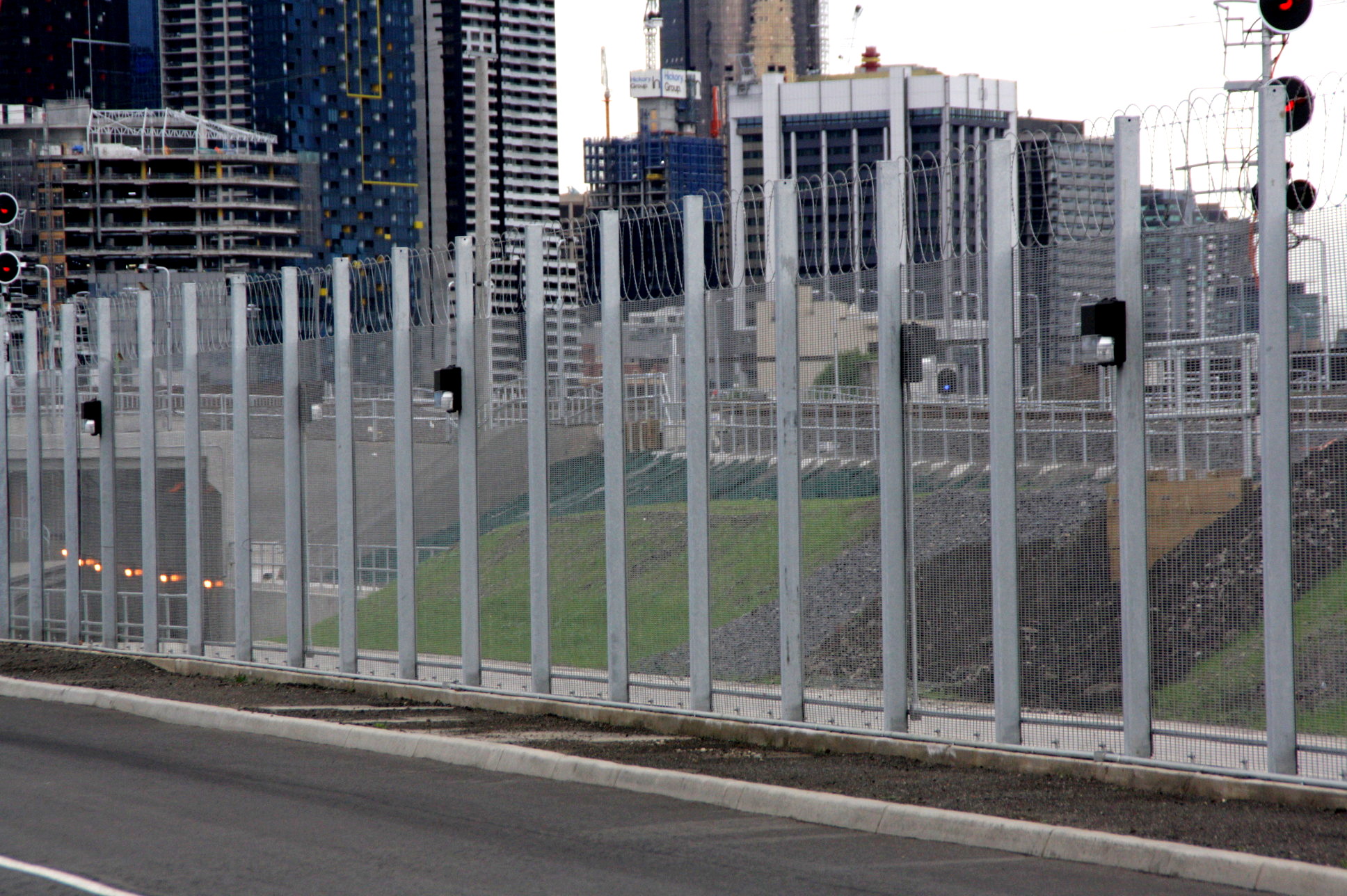
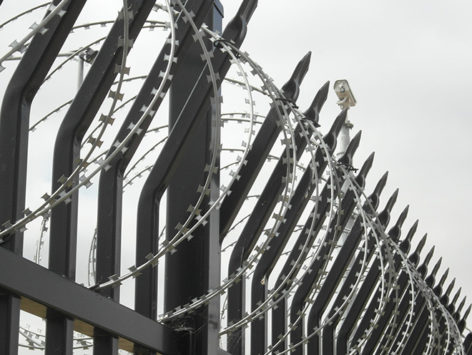
DEFCON Palisade fence system has two post options. The system can add extra rails and security options such as razor wire, electrical energised fence.

The reason for their superiority is in the added strength of the products over the standard tubular products, providing immeasurable protection when combined with razor wire, anti-dig mesh and surveillance.
Defcon 358 MESH Security Fence

This is Not any Weld Mesh

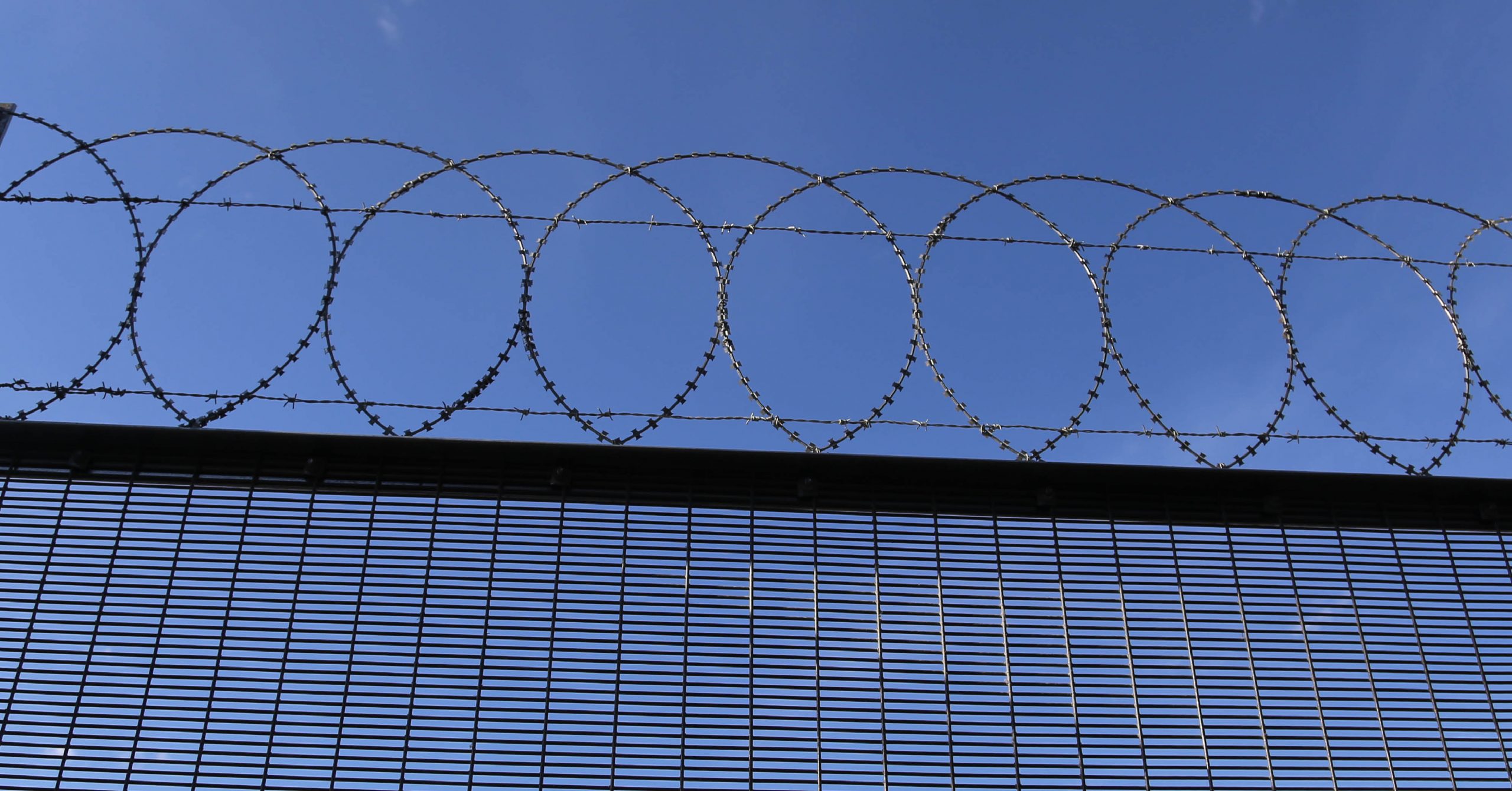
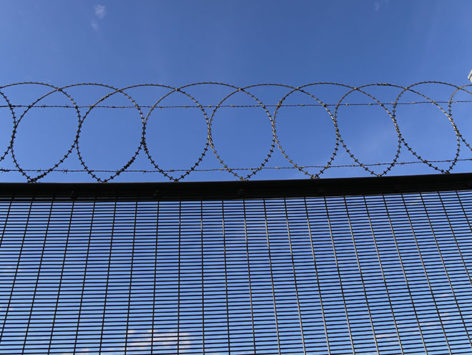
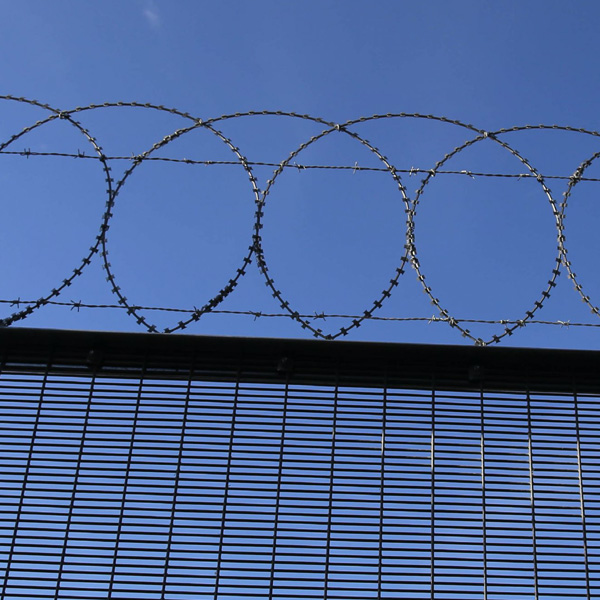
Another Defcon product with high-security requirements is the 358 mesh. These products provide that extra level of protection required for commercial and industrial properties at risk of intruders. The reason for their superiority is in the added strength of the products over the standard welded mesh. These products provide immeasurable protection when combined with razor wire, anti-dig mesh and surveillance.
The product is constructed with One Steel Zelcot wire. Zelcot wire has a zinc/alloy coating which offers a four-time lifespan greater life than galvanised wire.

Try climbing this fence, and you will see why it is commonly referred to as a 358 Anti Climb. Because of its tight aperture of only 9mm.

The mesh is commonly overlapped and installed to RHS square posts and fixed to the face with security fixing over a faceplate.

We also fix the mesh to UB or UC posts where extra stretch and security is required. The front web of their posts are pre-drilled, and the mesh is bolted to the columns with 8mm pan head bolts and shear nut, which break off when tensioned.

Many of our DEFCON 358 fences are completed with razor wire or coils above.

Defcon TUBULAR Security Fences

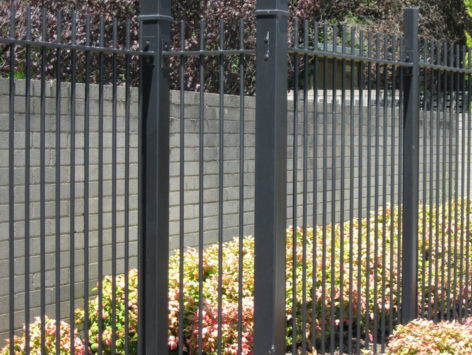
Defcon Security Tubular fencing is a proven and economical fence system to secure your site.

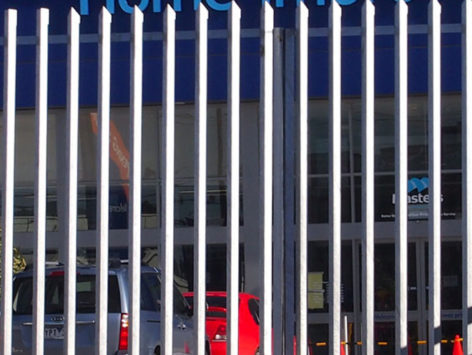
Standard DEFCON Tubular has four types of tops – Spear, Capped, Loop and Cracked Spear Top Tubular Fencing, which are appropriate for securing properties and deterring intruders due to the defensive design of the fence and durability of the steel.

This premium Tubular fencing is hard to climb, and the tubular pickets are hard to force open. A cranked pressed spear design is available for added perimeter security of your commercial or industrial property, which is even harder to climb and can be combined with razor wire to intimidate intruders.

FAQs

  • What is the DEFCON 358 Security Fence system and what makes it high security?

    The DEFCON Security Fence system is a high-security fencing solution designed for commercial and infrastructure projects across Melbourne and Australia. It uses 358 anti-climb mesh with a tight 9mm aperture, making it extremely difficult to cut or climb. Combined with high-strength steel construction and secure fixing methods, it is widely used in correctional facilities, rail corridors, and defence sites where maximum perimeter protection is required.

  • What materials and coatings are used, and how do they affect durability?

    DEFCON 358 fencing is manufactured using high-quality steel wire with advanced coatings such as Zelcot, a zinc alloy coating that provides up to four times the lifespan of standard galvanised wire. This significantly improves corrosion resistance, reduces maintenance requirements, and ensures long-term performance in Melbourne’s varying environmental conditions. Powder coating options can also be applied for additional protection and aesthetics.

  • Which applications and environments is DEFCON 358 fencing suitable for?

    DEFCON 358 Security Fencing is ideal for high-risk and high-traffic environments including rail infrastructure, defence facilities, correctional centres, education campuses, public infrastructure, and commercial developments across Victoria. It is designed for sites where anti-climb, anti-cut, and long-term durability are critical. For lower-risk projects, alternative fencing systems can be recommended to suit budget and security requirements.

  • What are the installation requirements and typical lead times?

    Installation of DEFCON 358 fencing requires proper site preparation, including ground assessment, post footing design, and alignment planning. Posts are typically set in concrete to ensure structural stability. Lead times vary depending on project scale, site conditions, and material availability, but most commercial fencing projects in Melbourne are scheduled and completed within agreed construction timelines with minimal disruption to site operations.

  • What additional security features or upgrades are available?

    DEFCON 358 Security Fencing is a high-security fencing solution widely used across Melbourne and Victoria for commercial, industrial, and infrastructure projects requiring strong perimeter protection. Built with 358 anti-climb mesh featuring a tight 9mm aperture, it is extremely difficult to cut or climb, making it ideal for rail corridors, correctional facilities, and defence sites. Manufactured from high-quality steel with advanced coatings like Zelcot, it offers excellent durability and corrosion resistance in Australian conditions. The system can be upgraded with features such as anti-dig mesh, reinforced rails, and integrated access control systems. For enhanced security, it can also be topped with flat loop razor wire, concertina razor wire, or an anti-climb duct, providing an additional deterrent layer against intrusion.

  • What are the cost differences between DEFCON variants?

    The cost of DEFCON 358 fencing varies depending on the level of security, materials, and site requirements. 358 mesh fencing is typically more cost-effective for high-security applications, while anti-ram and palisade systems involve higher upfront investment due to increased strength and materials. In Melbourne’s commercial and infrastructure projects, the focus is often on lifecycle value, where higher initial investment results in lower long-term maintenance and replacement costs.

  • What warranty and lifecycle can be expected from DEFCON 358 fencing?

    DEFCON 358 Security Fencing is designed for long-term performance, with coatings and materials engineered to withstand harsh environmental conditions. Depending on the coating system and installation quality, the expected lifespan can extend well beyond standard fencing systems. Warranty coverage typically applies to both materials and workmanship, ensuring confidence in durability and performance across commercial and industrial sites.

  • Does DEFCON 358 fencing meet Australian standards and compliance requirements?

    Yes, DEFCON fencing systems are designed and installed in accordance with relevant Australian Standards for structural performance, safety, and security. This makes them suitable for regulated environments such as rail, defence, and correctional projects across Melbourne and Victoria. Compliance ensures the fencing meets industry expectations for strength, durability, and risk mitigation.

  • What maintenance is required for DEFCON 358 Security Fencing?

    DEFCON 358 fencing requires minimal maintenance due to its high-quality materials and protective coatings. Regular inspections are recommended to check for any damage, loose fixings, or environmental wear. Preventative maintenance helps extend the lifespan of the system and ensures continued compliance with safety and security standards.

  • What site conditions are required, and how does the system perform on challenging sites?

    DEFCON 358 fencing can be adapted to a wide range of site conditions, including sloping terrain, rocky ground, and infrastructure-heavy environments such as rail corridors. Installation methods can be adjusted with engineered footing designs, customised post depths, and specialised techniques to ensure stability and performance. Early site assessment is critical to ensure the fencing system is designed to suit the specific conditions of each project.